Frequently Asked Questions
Overview of LPG
As LPG is portable and easy to store, it is suitable for both urban and remote locations where stable energy access is important. We support these applications by providing reliable LPG supply, gas cylinders, storage systems, safety equipment, and professional gas solutions tailored to different operational needs.
For larger industrial LPG systems, additional requirements may include engineering drawings, certified inspections, fire protection systems, gas leak alarms, and regulatory approvals. CECO can assist with LPG system design, equipment selection, installation, and compliance support based on applicable Thai regulations.
LPG & NH3 Equipment
Cryogenic & LNG Equipment
LNG, on the other hand, is primarily composed of methane and must be stored at cryogenic temperatures of approximately -162°C to remain in liquid form. It is commonly used for large-scale power generation, heavy industries, marine fuel, and long-distance natural gas transportation. Due to these differences, LPG and LNG require different storage systems, equipment, and safety considerations.
Oil / Gas Burners & Control Devices
Quotation and Project Delivery
Service and Maintenance
Regular inspection of the vaporizer during operation is required to ensure that it is functioning as intended. Please refer to the table below, which describes the parts of the vaporizer that require inspection, along with instructions on how to check these parameters. The inspection schedule is divided into daily, quarterly, annual, and five-year intervals.
Daily
| Item | Description | Normal Parameters |
| LPG Pressure | Check LPG Pressure in pressure gauge | 2-12 barg |
| LPG temperature | Check LPG temperature in gas temperature gauge | Above 110% of Ambient temperature |
| Water temperature | Check the water temperature in water temperature gauge | 60-65°C (setting 65°C) |
| Water level | Check the water level in the level gauge | Water level is middle to high level |
| Leak test for gas | Check all connections for gas leak by using a gas detector or soap water | No leakage |
| Leak test for water | Check all connections for water leak in the water bath | No leakage |
Quarterly
| Item | Description | Normal Parameters |
| Gas Drainage | Check gas connections by using the gas drain valve | Clean LPG |
| Water drainage | Check water conditions using the water drain valve | Clean water, pH 9.5-11 |
Annually
| Item | Description | Normal Parameters |
| Water inside the water bath | The water and anti-corrosive or anti-freezing solution inside the water bath need to be replaced regularly | Replacement of the water and anti-corrosive or anti-freezing solution inside the water bath |
| Float type Liquid LPG overflow prevention device | Check the function of the float type LPG liquid overflow prevention device by resetting the float | The float overflow prevention device blocks liquid LPG out |
| Water temperature switch for the heater operation | Check the function of the water temperature switch for the electric heater | The electric heaters and the magnetic contactor are on at 60-65°C when water temperature is set to 65°C |
| Water temperature switch for water overheat prevention | Check the function of Water temperature switch for water overheat prevention | The electric heaters and the magnetic contactor do not work at 75°C when the switch is set to 75°C |
| Water level switch and level controller | Check the function of Water level switch and level controller | The magnetic contactor and the heaters are turned off when water level is low. In this case, add water. |
| Water level gauge | Check the function of Water level gauge. After an overhaul, compare the actual water level with the level on the gauge | See Figure 1. for more details |
| Pressure safety valve | Check the function of pressure safety valve | Pressure relief valve discharges when pressure inside is above 17.6 barg |
| Magnetic contactor | Check the function of Magnetic contactor | The magnetic contactor works when the heater is on and the vaporizer is in normal operation. Normal output voltage is 220V |
| Electric heater | Check the function of the electric heater | Please refer to Figure 2. below for Resistance value between phases of electric heater |
| Electric transformer | Check the function of Electric transformer | Check input voltage (380V), and output voltage converted to 220V |
Figure 1. Indication of When to fill Water into KEV-Series Electric water bath Vaporizers
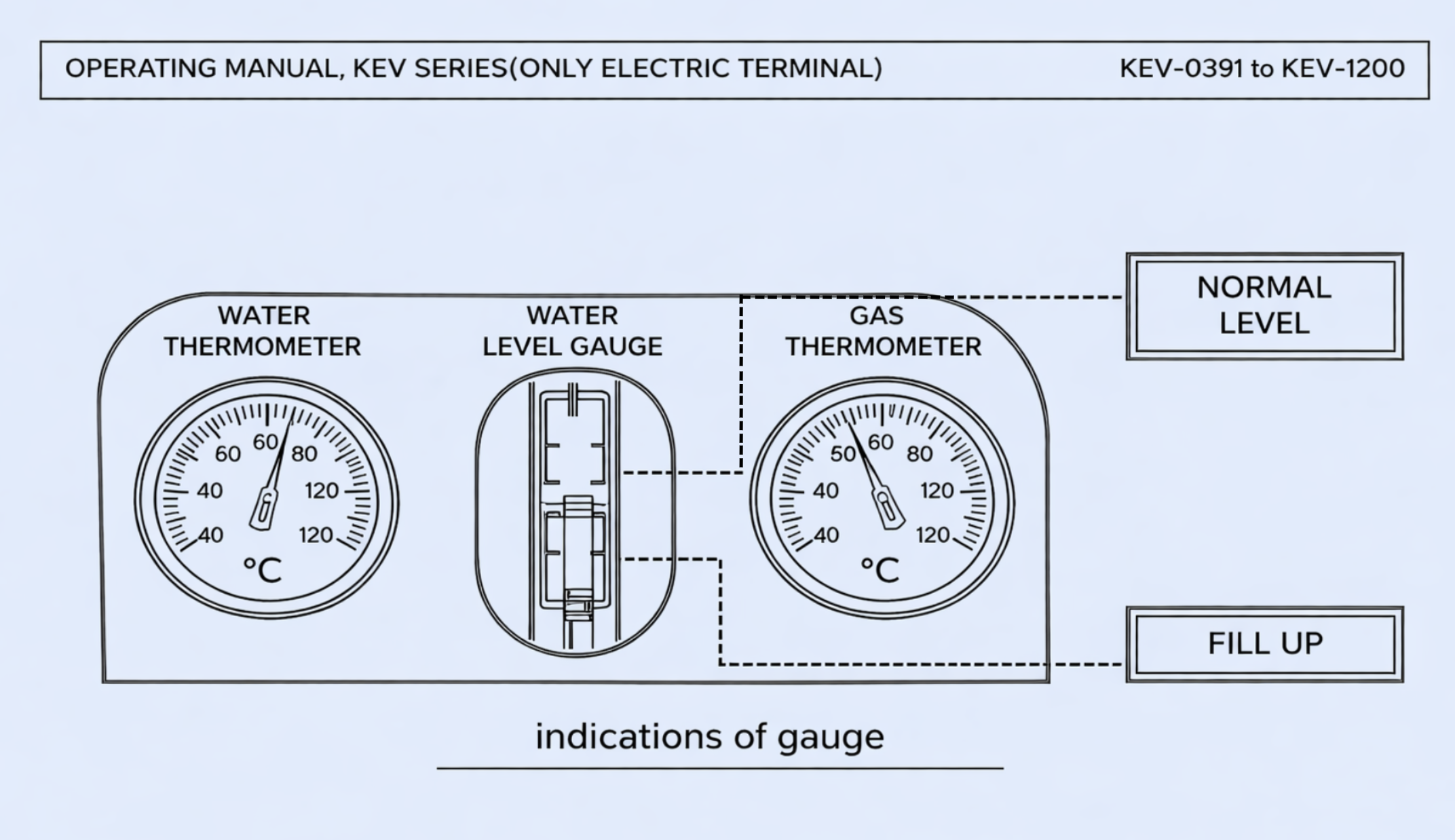
Figure 2. Resistance Value between Phases of Electric Heater
| Heater Capacity (kW/hr) | 220V 1P | 220V 3P | 380V 3P | 400V 3P | 415V 3P | 420V 3P | 440V 3P |
| 4.5 | 10.77 | 21.51 | 64.18 | 71.11 | 76.54 | 78.40 | 86.04 |
| 7.5 | 6.46 | 12.91 | 38.51 | 42.67 | 45.93 | 47.04 | 51.63 |
| 15 | 3.23 | 6.45 | 19.25 | 21.33 | 22.96 | 23.52 | 25.81 |
| 22.5 | 2.15 | 4.30 | 12.84 | 14.22 | 15.31 | 15.68 | 17.21 |
| 25 | - | 3.87 | 11.55 | 12.80 | 13.78 | 14.11 | 15.49 |
| 30 | - | 3.23 | 9.63 | 10.67 | 11.48 | 11.76 | 12.91 |
| 35 | - | - | 8.25 | 9.14 | 9.84 | 10.08 | 11.06 |
| 40 | - | - | 7.22 | 8.00 | 8.61 | 8.82 | 9.68 |
| 45 | - | - | 6.42 | 7.11 | 7.65 | 7.84 | 8.60 |
| 50 | - | - | 5.78 | 6.40 | 6.89 | 7.06 | 7.74 |
| 55 | - | - | 5.25 | 5.82 | 6.26 | 6.41 | 7.04 |
| 60 | - | - | 4.81 | 5.33 | 5.74 | 5.88 | 6.45 |
Components requiring replacement at 5-year intervals or after malfunction
- Water temperature switches
- Water level switch and level contactor
- Magnetic contactor
- Electric heater
- Electric Transformer
In rare cases, vaporizer malfunctions may occur due to various causes. The tables below outline the most common issues.
Abnormal Water Temperature
| Cause | Solution |
| Trouble in power | Check power lamp and repaire power supply |
| Failure of the level switch or low water level | Add water, and if trouble continues replace the level switch |
| Fuse (melted internal conductor) | Check fuse or replace |
| Failure of the magnetic contactor | Check contacting area and repair or replace |
| Failure of the electric heater | Check the phase-to-phase resistance and replace the heater if it is abnormal |
Trouble in Gas Supply
| Cause | Solution |
| Failure of the inlet valve | Check the vaporizer pressure. If it is abnormal, repair or replace the valve |
| Abnormal water temperature | Verify the causes of abnormal water temperature and take corrective action |
| Gas usage exceeded specified capacity | Check gas consumption and contact Ceco Service |
Frost at the Outlet of Vaporizer
| Cause | Solution |
| Failure of the liquid overflow preventation device | Check cause of abnormal water temperature or gas consumption and contact Ceco Service |
Actuation of Circuit Breaker
| Cause | Solution |
| Insufficient capacity of circuit breaker | Replace circuit breaker with adequate capacity |
| Damage on the heater | Replace the heater |
| Damage on the water level switch | Replace the water level switch |
| Short circuit | Check wiring and repair |
- Close Inlet & Outlet valves.
- Discharge gas from the vaporizer (Drain slowly using the drain valve while checking pressure gauge).
- Press the blue button vertically on top of the vaporizer.
- Check for any issues with the gas supply and inspect for frost at the vaporizer outlet. If the problem persists, please contact our support team. Otherwise, proceed to Step 5.
- Supply gas into the vaporizer and resume operation.
 MakeWebEasy